





Certain personal services historically spread only inside closed social networks. Participants faced social stigma and restricted choice. Access depended entirely on trusted insiders who could vouch for discretion and quality. Digitalisation dismantled many of those historical barriers. People gained unprecedented levels of privacy and variety in categories once considered off-limits. Today, even highly specialised and personal services have found their place in the digital ecosystem — from premium companionship to exclusive experiences, where someone looking for ankara escort can now make an informed and discreet choice based on verified profiles, real reviews, and transparent conditions.
Niche and sensitive categories recorded the highest migration to online channels after 2020. Users appreciate the ability to compare detailed profiles without personal introductions. Verified identification, encrypted messaging, and mutual review systems replaced informal recommendations. This shift expanded access while preserving privacy for both parties.
The Decline of Traditional Local Search Methods
Yellow Pages directories once served as the main reference for local electricians, mechanics, and tutors. Families scanned newspaper classifieds or collected business cards at community events. Word-of-mouth recommendations travelled slowly through neighbours and colleagues. These channels delivered limited options tied to specific neighbourhoods and operating hours.
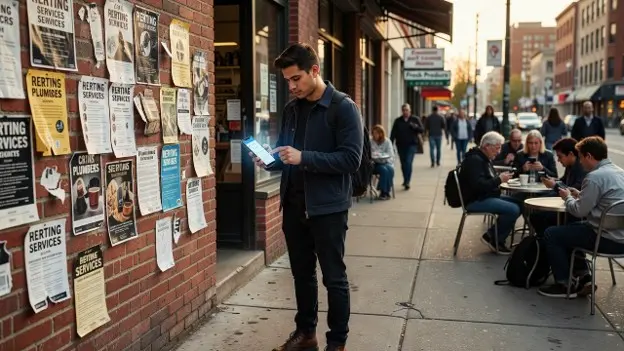
Users in 2026 encounter immediate problems with availability after 6 p.m. or on weekends. Verification of quality remains difficult without direct prior experience. Choice stays narrow to businesses known inside small social circles. Geography restricts results to a 10-mile radius at best. Time of day determines whether any provider answers the phone. These constraints pushed consumers toward faster alternatives.
The Rise of Digital Marketplaces and Service Platforms
Service aggregators such as Yelp, Thumbtack, TaskRabbit, and Uber replaced printed directories as the default city guide. The online-to-offline local services market reached 3.85 trillion dollars with consistent double-digit growth. Users shifted from hunting individual masters to comparing multiple bids inside 30 seconds.
TaskRabbit recorded 400 percent more home service bookings between 2020 and 2025. Uber expanded its service verticals into deliveries and maintenance across 70 countries. Local aggregators in Europe and Asia mirrored this pattern with category-specific apps. Consumers now expect real-time availability, transparent pricing, and instant messaging with providers. This behaviour change eliminated the need for multiple phone calls and physical visits to gather quotes.
How Search Engines and Local SEO Redefined Discovery
Google My Business profiles and the Local Pack determine visibility for 58 percent of searches that carry local intent. Voice commands and “near me” phrases trigger immediate map results with directions and hours. Algorithms evaluate review volume, response speed, and behavioural signals, including time spent on the business website and repeat visits.
Position inside the top three map spots drives 76 percent of users to visit or contact the business within 24 hours. A prominent street sign lost relevance once mobile searches surpassed desktop traffic. Businesses that optimise photos, update hours, and maintain consistent NAP data appear more often than competitors with superior physical locations. Local SEO became the new shopfront that operates 24 hours regardless of foot traffic.
The Power of Reviews, Ratings, and Social Proof
87 percent of consumers read online reviews before they select any local service provider. A 4.7-star rating often outperforms a 4.9-star score because buyers perceive perfect ratings as potentially manipulated. Platforms deploy machine learning filters that detect patterns in fake five-star bursts posted from identical IP ranges or devices.
Video testimonials increased conversion rates by 34 percent compared with text-only feedback. Providers who upload before-and-after photos or short job walkthroughs receive 62 percent more enquiries. Recent reviews carry triple the weight of older ones in ranking calculations. Users learned to scan for specific mentions of timeliness, cleanliness, and communication quality rather than overall star count alone. This data layer created measurable trust signals that traditional referrals could never match.
Challenges and the Dark Side of Digital Local Services
Information overload complicates decisions when 50 providers answer the same query within minutes. Distinguishing genuine quality from polished marketing requires cross-checking multiple review sources and recent activity. Fraudulent profiles still appear despite verification badges, especially in high-value home repair categories.
Algorithms that favour lower prices sometimes push aggressive upselling once the job begins. Data privacy concerns grow as location history and contact details accumulate across several marketplaces. Users protect themselves by requesting video calls before booking, starting with small test tasks, and paying through escrow systems that release funds only after completion. Reading reviews posted in the past 30 days and confirming provider licensing through government databases further reduces risk. Savvy consumers treat the first interaction as due diligence rather than commitment.
The Future — AI, Hyperpersonalisation and Instant Booking
Artificial intelligence will predict service needs before users recognise them. Calendars combined with past behaviour will trigger automatic recommendations for car maintenance or tutoring sessions when patterns indicate upcoming gaps. Hyperpersonalised suggestions will factor in location, budget history, preferred communication style, and even weather data for outdoor jobs.
Augmented reality previews will let homeowners visualise renovation outcomes before they hire contractors. Instant booking inside messenger apps will replace separate scheduling platforms and cut decision time from minutes to seconds. Integration with voice assistants will handle entire transactions from discovery to payment confirmation. Behavioural factors such as communication quality and punctuality will feed increasingly accurate matching systems. The process will evolve from active search to passive fulfilment, where suitable providers surface at the exact moment of need.
