




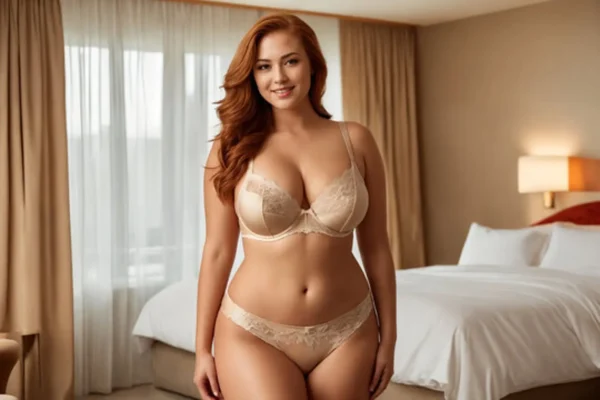
The process of creating character designs doesn’t always need to start with an established look. Often, some of the most compelling ideas are born when designers test new combinations of proportion, personality, style, environment, and how something is displayed rather than what they ever thought possible for their work.
The generative AI technology allows designers to test different ideas on fictional characters and to test out many different versions to see which direction works best visually while they are developing the idea. Platforms like BBW AI Porn are examples of niche uses of AI-generated fiction to create new and exciting images in the larger scope of a designer’s creativity.
Start With the Character’s Presence
Beginning with the character’s presence and all that is in it may provide more than just one or two physical characteristics for a character’s ability to make an impression.
Posture, facial expressions, clothes, their environment, and total appearance are some of the many things that contribute to the way someone looks at them.
Each of these elements allows creators to manipulate what makes up their character visually while making as much of an impact as possible through less detail.
Explore Different Body Shapes
A digital character can be just about any body type you can imagine.
Artificial intelligence is helping artists develop their own characters by providing them an opportunity to try out new shapes, new proportions, new clothes, and various ways of posing your characters within the same concept.
This will provide the artist an opportunity to get away from using the same template over and over again and begin to develop characters with a personal style.
Let Clothing Shape the Visual Direction
A wardrobe and an overall look on a character can greatly alter how we see that character. For example, casual, formal, business, costume (fantasy), or design (futuristic) will give you a totally different personality and setting for your character.
Use Scale and Composition
The way a character is positioned within an image can affect how the entire scene feels.
A close composition can emphasise expression and personality, while a wider frame can give greater importance to the environment.
Experimenting with scale can therefore create variety without changing the character itself.
Give the Environment a Purpose
Environments in video games provide information about a player’s surroundings, as well as their location within that environment; they can also provide context for why an environment is being experienced by the player.
Video game development has made use of artificial intelligence (AI) to allow developers and designers to generate and experiment with different environments and identify those that best support the gameplay and player.
Experiment With Contrast
Interesting compositions can emerge from unexpected combinations.
A detailed character can be placed in a simple environment, while a visually restrained character might work against a more elaborate setting.
Contrasting colours, textures, lighting, and surroundings can also help important elements stand out.
Build a Character Through Iteration
A character does not need to be finalised in one attempt.
Creators can begin with a basic concept, review the result, and gradually adjust the details that matter most.
Each generation can provide information about what works and what needs to change.
This makes character development a process of refinement rather than a single design decision.
Create Variations Without Starting Over
Create variations by changing your scene rather than starting over with a new character.
While maintaining recognisable attributes of a fictional identity, you can vary environments, wardrobe choices, lighting options, and composition to interpret your concept in new ways.
By doing so, you may be able to build a body of work using the same character.
Specialised AI Is Opening New Niches
Generative A.I. is rapidly becoming more niche in its focus on different areas of interest in creating content.
For example, BBW AI Porn represents a single type of generated fictional content based on the platform; other tools exist to assist with generating illustrations, characters, animations, videos, etc., and to tell stories.
The rapid development of these types of A.I. will provide users with greater options in their tool selection for individual project needs.
Unexpected Results Can Improve the Design
AI generation can sometimes produce an outcome that differs from the original concept.
Rather than automatically discarding it, creators can identify useful elements within the result.
An unexpected pose, colour combination, background, or styling choice might become the inspiration for a stronger version of the original character.
Turn Characters Into Recurring Creative Assets
A well-developed character can appear across multiple projects and scenes.
Creators can establish recognisable features while allowing the character to change clothing, location, mood, and activity.
This creates a balance between familiarity and variety.
AI Can Support Early Concept Development
Generative tools can also be used before a project reaches the production stage.
Creators can test rough concepts, compare different visual directions, and determine which ideas deserve more development.
This can reduce the amount of time spent pursuing concepts that do not work visually.
Human Judgement Still Shapes the Result
The developer may have thousands of options with AI to choose from; however, it is their decision as to which of those options will be the most beneficial.
The developer selects the overall idea that the design should represent; evaluates all the different versions; refines the key characteristics of the design; and decides on the manner in which the design should ultimately be displayed.
Although technology may aid in accelerating the process of trying out various ideas for the design, the developers’ own judgement regarding creativity is always paramount.
Where Character Design Could Go Next
As AI systems continue to develop, creators may gain more control over how characters appear across different scenes, environments, and creative formats.
This could make it easier to treat fictional characters as flexible assets that can evolve across larger projects.
Final Thoughts
AI is giving creators more freedom to move beyond familiar character-design formulas.
Different body types, clothing, environments, compositions, and visual treatments can be explored without requiring every concept to be finalised from the beginning.
Specialised platforms such as BBW AI porn are one example of the growing range of AI-generated fictional content, while the broader technology continues to give creators new ways to experiment with character identity and visual storytelling.
