




London after dark used to be described through a familiar set of images. A crowded West End pavement, a nightclub queue, a theatre curtain and the glow of a late restaurant were treated as parts of one enormous night-time machine. That version of the city still exists, but it no longer tells the whole story.
The modern London night is becoming more personal. People are planning around a mood instead of a famous address. They are choosing one neighbourhood rather than crossing the capital for a checklist of venues. A late gallery opening, a small dining room or a carefully chosen companion can now carry more meaning than the loudest room in town.
This is not evidence that London has lost its appetite for spectacle. It suggests something more interesting. The city is learning to offer intimacy and scale at the same time. Its nightlife can still feel immense, but the best evenings increasingly depend on editing that abundance into something that fits the people taking part.

The big night out no longer has a single address
There was a period when going out in London seemed to require a journey towards a recognised centre. Soho, the West End and a handful of large clubs defined the popular idea of nightlife. They remain important, yet the city after dark is now distributed across neighbourhoods with very different personalities.
Soho still offers density. Restaurants, bars, theatres and late streets sit close enough together for an evening to change direction without a long journey. Mayfair and St James’s provide a quieter kind of polish, where service and setting matter more than volume. Shoreditch favours creative spaces and a more casual rhythm, while Camden continues to draw nights built around live music. South Bank offers another version entirely, with river walks, cultural venues and illuminated architecture doing much of the atmospheric work.
The difference matters because a neighbourhood is no longer just a backdrop. It shapes how people dress, how quickly the evening moves and how much space there is for conversation. Choosing the wrong area can make a simple plan feel complicated. Choosing the right one reduces the need to manufacture excitement.
Culture is staying awake later
London nightlife is often reduced to drinking and dancing, although the city has spent years expanding what can happen after ordinary opening hours. Museums and galleries host late events with performances, talks, workshops and music. Theatre remains central to the West End, while smaller venues combine comedy, film, live music and immersive formats.
This wider cultural offer changes the structure of a night. Instead of meeting only for dinner, people can share an experience that gives the evening a natural subject and rhythm. A performance removes the pressure to fill every silence. An exhibition lets two people move at their own pace. A river walk after an event can feel more specific to London than another reservation in a room that could exist in any large city.
The official visitor guides increasingly present London after dark in this broader way. Late museums, river experiences, live entertainment, unusual activities and seasonal outdoor events now sit alongside bars and clubs. The message is clear. A night out does not need to follow one traditional formula.
Smaller plans can feel more luxurious
Luxury nightlife once relied heavily on display. The table, bottle, entrance and bill all communicated status. Those signals have not disappeared, but they are no longer enough to make an evening feel special. Privacy, attention and the freedom to change plans can be more valuable than a recognisable room.
A smaller plan also leaves space for the people involved. One good restaurant and a quiet drink afterwards can reveal more personality than four rushed stops. A hotel lounge can feel more sophisticated than a crowded private area when the service is calm and nobody is competing with the music. The important detail is not necessarily exclusivity. It is control over the pace.
This explains part of the appeal of evenings designed around a particular person rather than a list of destinations. The setting still matters, but it supports the interaction instead of replacing it. London provides almost unlimited choice. Restraint is what turns that choice into style.
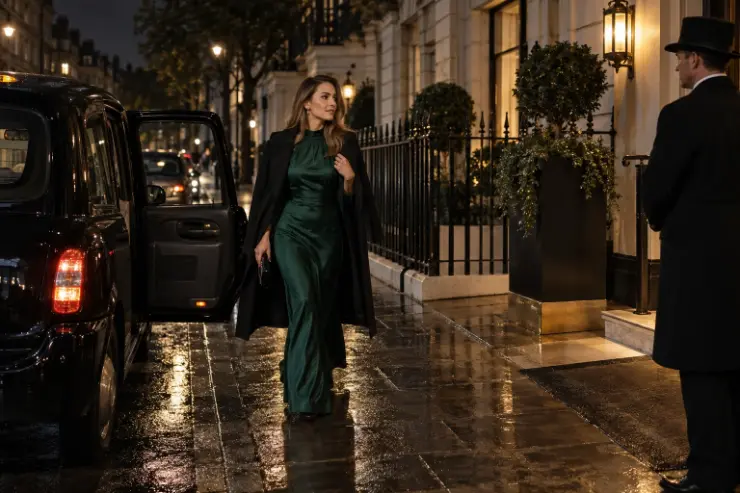
Company has become part of the planning
The question of who shares the evening has moved closer to the beginning of the plan. Some people go out with a partner or a long-established circle of friends. Others are travelling alone, attending an event in the city or simply looking for company that matches a particular occasion.
That choice is now researched with the same care as a restaurant or hotel. Within this wider move towards individually planned evenings, adults interested in professional companionship may use uEscort to compare London escorts by location, availability and the detail provided in each profile. The directory belongs in the planning stage, not as the subject of the entire night.
Appearance may create the first impression, but social ease, punctuality, discretion and conversation determine whether company suits the occasion. A formal dinner asks for a different energy from a concert or a spontaneous drink. The most convincing choice is the one that fits the setting without making the evening feel staged.
This is where clarity matters. Both people should understand the broad shape and timing of the plan. A short, respectful conversation before meeting can resolve practical expectations and prevent the kind of uncertainty that becomes more awkward in person. Good company rarely feels accidental, even when the evening itself remains flexible.
Privacy has become part of good taste
Discretion is sometimes confused with secrecy. In practice, it is closer to courtesy. It means avoiding unnecessary exposure, not sharing messages or photographs without permission and understanding that another person’s identity is not material for a public story.
The phone is often the clearest test. Leaving it face down during dinner changes the quality of attention. Asking before taking a photograph prevents an easy moment from becoming uncomfortable. Waiting until later to post a location protects the privacy of everyone present.
London offers countless places where people can be seen, but a sophisticated night does not require constant proof that it happened. Privacy allows conversation to become less performative. It also makes an evening feel separate from the stream of ordinary notifications, work messages and public updates that fill the rest of the week.
Transport decides whether the mood survives
The atmosphere of a night can disappear in the wrong journey. London distances are deceptive, and two areas that look close on a map may be separated by a slow route or a change that feels much longer after midnight. Good planning treats travel as part of the evening rather than an inconvenience to solve at the last moment.
Selected Tube lines run through Friday and Saturday nights, supported by a much wider network of night buses. The service is valuable, but it does not make every route simple. Engineering work, major events and temporary closures can still alter the journey. Checking the route on the same day and keeping a licensed taxi or private-hire alternative in mind is sensible.
The more elegant approach is usually geographical. Keep the evening within one district or along one clear transport line. Dinner in Soho followed by a West End performance has an obvious flow. A South Bank event followed by a riverside drink belongs to the same story. Moving repeatedly between east and west London may look ambitious, but it often turns the city into an obstacle.
Different neighbourhoods create different evenings
A Mayfair night tends to reward preparation. Reservations matter, dress is more considered and the best version usually moves slowly. Dinner and one later drink may be enough. The pleasure comes from service, conversation and the sense that nothing needs to be rushed.
Soho is more adaptable. An early drink can lead to theatre, dinner or a smaller late venue without a major journey. The streets remain busy, which brings energy but also makes a calm meeting point valuable. It suits people who want choices without committing the entire evening in advance.
South Bank works when the visual identity of London should remain present. The river and illuminated skyline create a natural transition between culture, dinner and walking. Shoreditch offers a more contemporary pace, while Camden still makes sense when music is the central reason for going out.
None of these areas is automatically better. Their value lies in how clearly they communicate a mood. The strongest plan uses that character instead of fighting it.

London nights are becoming more intentional
City Hall describes the night-time economy as everything taking place between 6pm and 6am, from hospitality and culture to transport, healthcare and essential services. That definition is useful because it shows how much infrastructure sits behind a seemingly simple evening.
A restaurant depends on late workers and deliveries. A theatre audience depends on transport continuing after the curtain. A private meeting depends on hotels, reception staff, drivers and venues understanding the rhythm of the city after ordinary business hours. London nightlife is not one industry. It is a network of people making the city function while most offices are closed.
Recognising that complexity encourages better behaviour. Punctuality matters. Clear communication matters. Respect for staff, venues and the person sharing the evening matters. These details are not limitations on pleasure. They are what allow a night to feel smooth.
The future belongs to nights with a point of view
London will continue to offer enormous rooms, famous names and crowded events. It should. Spectacle is part of the city’s character. Yet the most interesting development is the growing confidence to choose something smaller and more personal.
A successful night no longer needs to prove how many places were visited. It needs a clear reason for bringing people together. That reason might be a performance, a conversation, a celebration or simply the wish not to spend another evening alone in a hotel room.
The new London night out is not defined by one district or one type of venue. It is defined by attention. Choose the mood, the area and the company with care. Settle the practical details, then leave enough room for the city to surprise you. London still supplies the scale. The people involved give the night its shape.
